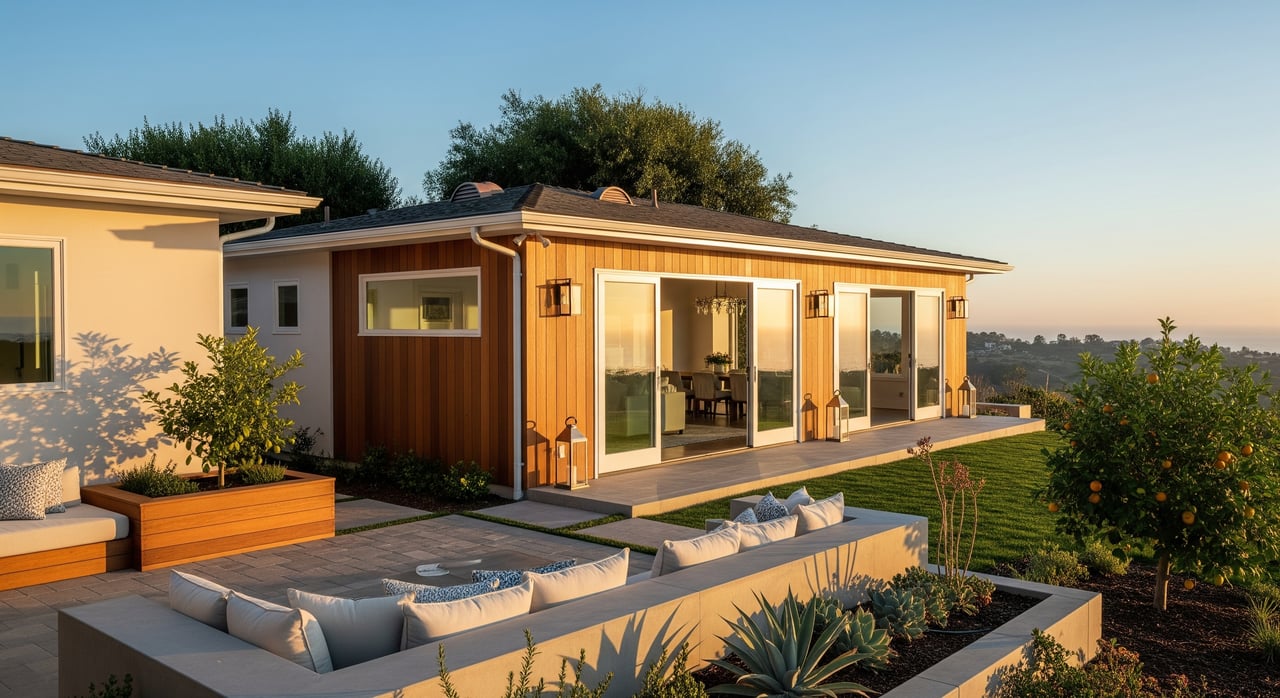
Thinking about adding an accessory dwelling unit to your Laguna Niguel property? You are not alone. ADUs and junior ADUs are a smart way to create flexible space, support multigenerational living, or add long-term rental income. In this guide, you will learn how California rules work with Laguna Niguel’s local standards, what to check on your lot, how parking and permits work, typical costs, and a simple action plan to move forward. Let’s dive in.
What California law guarantees
California Government Code sections for ADUs and JADUs set the baseline rules cities must follow. Most ADU applications are reviewed using a ministerial, objective process that limits subjective design review. Building codes under Title 24 control safety, structure, energy and related systems.
A junior ADU is a specific type of small unit. It must be 500 square feet or less and located within the existing single-family home. A JADU often converts a bedroom or other living space and has streamlined requirements compared to a new detached unit.
State law also limits how cities handle parking and setbacks for ADUs. Many projects qualify for parking exemptions, and detached ADUs benefit from reduced setback rules in specific situations. You still need to meet building and fire code standards, but the ministerial pathway is designed to be predictable when you follow objective rules.
What Laguna Niguel can still require
Local rules matter. Laguna Niguel applies objective standards for height, setbacks, lot coverage or floor-area-ratio, exterior materials, windows and privacy, and landscaping. The city also administers fees, utility clearances, and building inspections. If your property lies in the coastal zone or a hillside or fire hazard area, extra steps or reviews can apply.
Because local numeric limits vary by zone and can change, confirm exact measurements and fee schedules with Laguna Niguel Planning and Building before you start design. That check saves time and helps you plan a complete, approvable submittal.
Quick feasibility checklist
Use this checklist to spot deal breakers early and shape your design.
Zoning and ADU types
- Identify your zoning. Rules differ for single-family and multifamily parcels.
- Decide on the unit type. Options include a garage conversion, an attached addition, a detached ADU, or a JADU within the existing home.
- On multifamily lots, state law can allow more than one ADU in some cases. Confirm specifics with the city.
Site and lot limits
- Map setbacks and height for your zone, and check lot coverage or FAR.
- Note slopes, retaining walls, drainage, easements, and trees that affect building locations.
- If you plan a detached ADU, review reduced setbacks allowed by state rules and how they work with local standards.
Utilities and sewer
- Confirm whether you are on municipal sewer or a private septic system.
- Ask your water and sewer districts about connection and impact fees.
- Budget for potential sewer lateral upgrades or capacity fees.
HOAs and CC&Rs
- Review HOA covenants and rules. Private CC&Rs may restrict or prohibit ADUs.
- Get written guidance from the HOA early and consider legal counsel if needed.
Access, parking and fire safety
- Measure driveway widths and clear access for emergency vehicles.
- Check if your site is in a fire hazard area. Defensible space and fire access can shape design and cost.
- Review whether you qualify for ADU parking exemptions.
Coastal or hillside areas
- If you are in the coastal zone, coastal approvals or local coastal program rules can apply.
- Hillside or steep lots often need extra engineering and can raise costs.
Parking rules and exemptions
State law limits when cities can require new off-street parking for ADUs. Common exemptions include:
- Conversions of existing space or garages typically do not require new parking.
- ADUs within one-half mile of public transit are often exempt from parking requirements.
- Units in architecturally or historically significant districts, or near car-share services, may qualify for exemptions.
- If the area requires on-street parking permits and they are not offered to the ADU occupant, the city should not require replacement parking.
In practice, many Laguna Niguel homeowners will find they do not need to add parking if they meet one of these categories. You still need to follow objective standards for driveways, paving and sight lines. Always confirm your exemption status with Laguna Niguel Planning.
Permit process and timeline
Step-by-step path
- Preliminary check. Pull zoning and parcel data, confirm overlays and utility providers.
- Pre-application meeting. Ask planning and building staff for the objective standards, required plans, and fees. This step can save weeks.
- Design and construction documents. Prepare a site plan, floor plans, elevations, structural and MEP drawings, energy compliance and utility diagrams. Conversions need fewer drawings but still require plans.
- Submit complete application. Planning reviews zoning and objective standards. Building reviews code, structural, energy, fire, plumbing and electrical. Utility districts and the fire department provide clearances as needed.
- Permit issuance and construction. The city inspects foundation, framing, rough trades, insulation and final.
- Final inspection and occupancy. Once you pass final, you can occupy or lease the unit according to local rules.
Typical timelines
- Many jurisdictions target about 60 days to act on a complete ministerial ADU application. Actual timing depends on submittal quality and workload.
- Simple conversions can run 2 to 6 months from application to occupancy.
- New detached ADUs often take 6 to 12 months or more for design, permits, utility work and construction.
- Projects in the coastal zone, on steep slopes, or with discretionary approvals can run 9 to 18 months or more.
Budget and cost drivers
ADU costs vary with scope, finishes and site conditions. In Orange County, here are common ranges:
- Garage conversion to a one-bedroom ADU. About 40,000 to 150,000 dollars depending on existing conditions and upgrades.
- Attached ADU addition. About 120,000 to 300,000 dollars or more.
- New detached ADU, 500 to 1,200 square feet. About 150,000 to 450,000 dollars or more, with higher costs for complex sites or premium finishes.
- Per square foot. Roughly 200 to 500 dollars or more depending on finish level and site complexity.
Fees and extras to plan for
- City permit and plan-check fees, and potential school, water and sewer impact or connection fees.
- Sewer lateral upgrades, septic abandonment or replacement, drainage and grading, retaining walls and hillside work.
- Professional services. Architect, engineer, energy consultant and survey. Add financing costs and landscape restoration as needed.
Financing options
Many owners use a home equity line, cash-out refinance, construction loan or a renovation mortgage. Some lenders consider projected ADU income during underwriting. Speak with lenders who have ADU experience to compare terms.
Local watch-outs in Laguna Niguel
- Coastal zone parcels may require coastal approvals that extend timelines and affect allowable development.
- Hillside and wildfire areas need additional fire access, defensible space and engineering, which raise costs.
- Sewer capacity and lateral requirements can add fees or upgrades.
- Rental rules are local. State law permits ADU rentals, but short-term rental restrictions are set by the city and by HOAs.
- Objective design standards apply. Expect rules that guide exterior materials, height, windows and privacy.
Action plan to get started
- Confirm zoning and overlays. Use parcel tools or contact the city to confirm your zone, lot size, and whether you are in the coastal or fire hazard areas.
- Decide on unit type. Compare a conversion versus a new detached or attached ADU and a JADU within the existing house.
- Schedule a pre-application call. Ask for the ADU checklist, submittal requirements, fee schedule and current review timelines.
- Verify utilities. Call your water and sewer providers and the sanitation district to confirm connection, lateral upgrades and fees.
- Gather HOA documents. If you have an HOA, get written guidance on approvals and restrictions.
- Build a budget. Get at least two bids, one for a conversion and one for a new detached unit. Include soft costs and likely utility work.
- Assemble your team. A designer or architect experienced with ministerial ADUs, plus a contractor with Orange County ADU experience, will streamline approvals.
How Alex Gagnon Homes supports your plan
Building an ADU changes how your property functions and how it is valued. You deserve clear, data-driven advice. With local market expertise in South Orange County and hands-on renovation and investment experience, you get practical guidance on ADU resale impact, rent potential and neighborhood fit. We can help you evaluate tradeoffs between conversion and new build, connect you with experienced local pros, and align your ADU plan with your longer-term real estate goals.
If you are considering an ADU as part of a purchase, sale or value-add strategy, reach out to schedule a quick consult. You will walk away with an action plan and local insights tailored to your property and timeline. Connect with Alex Gagnon Homes to get started.
FAQs
How big can an ADU be in Laguna Niguel?
- State law sets maximums and local codes refine them within those limits. Junior ADUs are capped at 500 square feet and must be within the existing home. For standard ADUs, confirm the exact square footage and how floor area is measured with Laguna Niguel Planning.
Do ADUs near transit need new parking spaces?
- Many ADUs located within one-half mile of public transit are exempt from new off-street parking under state rules. Confirm your property’s eligibility with the city and review any driveway and access standards that still apply.
Do I have to live on the property if I build an ADU?
- Owner-occupancy rules have shifted at the state level and vary by unit type and timing. Check Laguna Niguel’s current practice and any deed or HOA requirements before you submit plans.
Can I add an ADU on a multifamily lot in Laguna Niguel?
- State law allows ADUs and sometimes more than one ADU on multifamily parcels. The exact number and configuration depend on objective standards. Verify details with the municipal code and planning staff.
Can I rent an ADU short term in Laguna Niguel?
- State law permits ADU rentals, but short-term rental limits are set locally and by HOAs. Review Laguna Niguel’s municipal rules and your HOA’s CC&Rs for specifics.
Will my property taxes increase if I build an ADU?
- An ADU typically increases assessed value. Contact the Orange County Assessor to understand how reassessment works and what to expect based on your scope.
What does an ADU cost in Orange County?
- Garage conversions often range from about 40,000 to 150,000 dollars. Attached ADUs commonly run 120,000 to 300,000 dollars or more. New detached ADUs often range from 150,000 to 450,000 dollars or more depending on site and finishes.
How long does an ADU take from permit to move in?
- Simple conversions often take 2 to 6 months from application to occupancy. New detached ADUs often run 6 to 12 months or more, and coastal or hillside projects can take 9 to 18 months or longer.