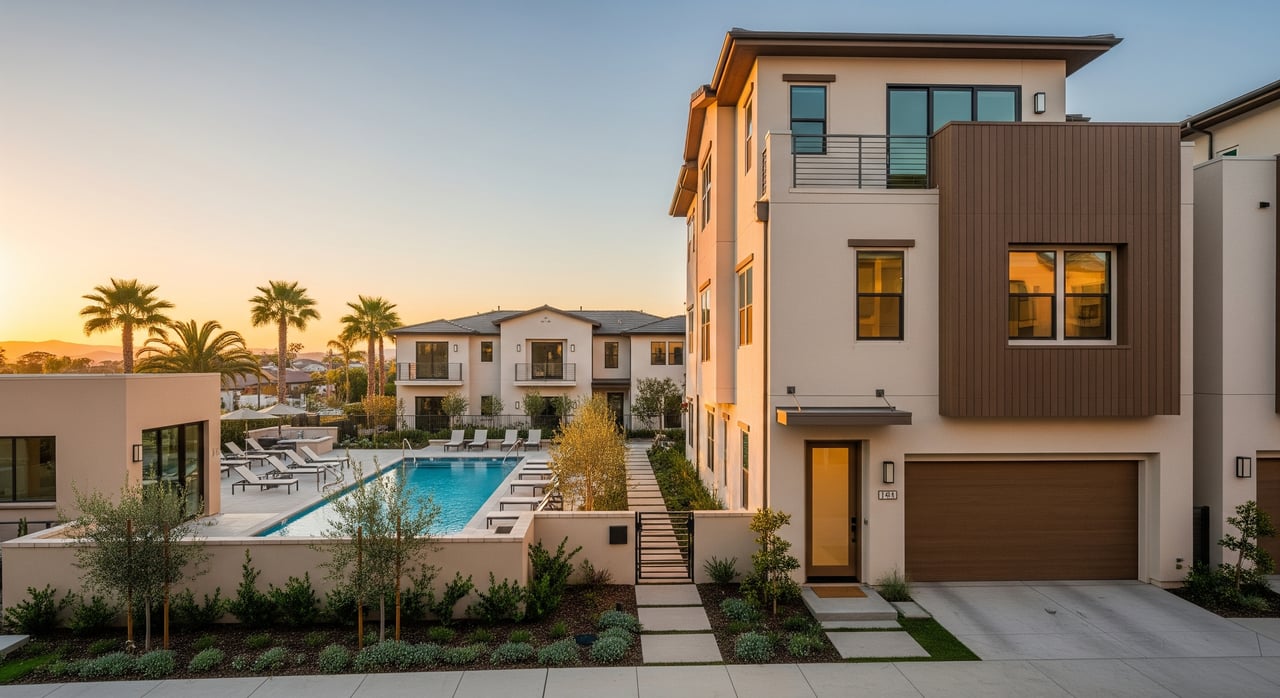
You are not alone if you are torn between a condo and a townhome in Aliso Viejo. Both are popular across this master‑planned community, and both usually sit inside well‑managed HOAs with pools, trails, and parks. The catch is that the biggest differences are about ownership, upkeep, and daily life rather than just how the homes look. In this guide, you will learn the legal, lifestyle, and cost differences that matter in South Orange County, plus a clear decision framework to help you choose with confidence. Let’s dive in.
Condo vs. townhome basics in California
Choosing between these two often starts with labels that can be misleading. In California, a condo is a legal form of ownership where you own the interior of your unit plus a share of common areas. A townhome is an architectural style that can be owned several ways. It may be fee‑simple, part of a condominium association, or part of a planned unit development.
What this means for you is simple. Always review the recorded legal description and the CC&Rs for the property you want. A “townhome” listing might legally be a condo, which affects insurance, maintenance, and financing. In Aliso Viejo, where most communities were built from the late 1980s through the 2000s, the HOA rules often define your obligations more than the marketing label does.
What you will feel day to day
Space and layout
- Condos often provide single‑level living or a simple duplex layout, which can make daily life easy and efficient. You will typically see studios to 2 bedrooms, though 3‑bedroom condos exist.
- Townhomes are usually 2 or 3 stories with bedrooms upstairs and living space on the main level. You will often find 2 to 4 bedrooms and more separation between spaces.
Parking and storage
- Condos frequently offer assigned spaces or carports. Some communities have detached or shared garages with rules for guest parking.
- Townhomes are more likely to include a private attached garage and possibly a driveway. That extra storage can be helpful for strollers, sports gear, or tools.
Outdoor space
- Condos typically offer balconies or small patios and shared courtyards or greenspace.
- Townhomes may include private patios, small yards, or direct yard access, which can be useful for play areas or a small garden.
Noise and privacy
- Stacked condo buildings can have neighbors above and below. Sound transmission can be a factor.
- Townhomes share side walls, but there is often more vertical separation between living areas, which can help with privacy.
HOA, maintenance, and insurance
In Aliso Viejo, most homes sit inside HOAs. The scope of what the HOA maintains varies by community and legal structure.
Who maintains what
- Condos: The HOA commonly covers the exterior shell, roof, common areas, landscaping, and exterior painting. You are usually responsible for your interior finishes and in‑unit systems.
- Townhomes: Responsibilities are split. In a fee‑simple townhome, you may maintain the roof and exterior. In many townhome communities, the HOA still maintains the exterior. Always verify the maintenance matrix in the CC&Rs.
Insurance basics to know
- Condos typically require an HO‑6 policy that covers personal property, interior improvements, loss assessment, and liability. The HOA carries a master policy for common elements and the exterior to the extent described in the CC&Rs.
- Townhomes may require an HO‑3 if fee‑simple or an HO‑6 if the townhome is part of a condominium regime. Your coverage should match the HOA master policy. Ask for the insurance certificate and check deductibles.
HOA dues and special assessments
- Condo communities often have higher monthly dues because the HOA maintains more of the building and grounds.
- Townhome dues can be lower or comparable depending on whether exterior maintenance is included.
Always request these documents before you write an offer:
- Current budget and reserve study
- Insurance certificate and deductible schedule
- CC&Rs, bylaws, rules, and recent board meeting minutes
- Any notices of planned special assessments
Total monthly cost, not just price
Affordability in Aliso Viejo is about your effective monthly housing cost, not only the purchase price. Add up:
- Mortgage principal and interest
- Property taxes
- HOA dues
- Homeowners insurance
- Utilities not covered by the HOA
Condos can offer a lower purchase price and a lower mortgage payment but higher HOA dues. Townhomes can have a higher purchase price but sometimes lower dues. The winner is the home with the best total monthly cost for your budget and lifestyle.
Financing and resale in Aliso Viejo
Condo financing hurdles
Condo projects are often subject to stricter lender review at the project level. Lenders may look at investor ownership ratios, delinquency rates, and litigation history. If you need FHA or VA financing, some lenders require the condo project to have prior approval. This can impact timelines and available loan options.
Townhome financing
If a townhome is fee‑simple, lenders often treat it like a single‑family home. That can mean fewer project‑level hurdles. If the townhome is part of a condo regime, expect similar reviews as a condo.
Resale considerations
- Townhomes usually appeal to buyers who want garage space, multiple bedrooms, and a bit of private outdoor area. That can broaden demand among family buyers.
- Condos often attract first‑time buyers, downsizers, and people who value lower maintenance and access to amenities. Marketability can be sensitive to HOA health and any special assessments.
Rules that affect flexibility
Rentals and occupancy
Many HOAs set rental caps or minimum lease terms. If you plan to rent out your home in the future, check rental restrictions and enforcement history in the CC&Rs and meeting minutes.
Parking policies
Expect rules about assigned spaces, guest parking limits, and fines. Ask whether spaces are deeded or assigned, and whether there are overnight rules.
Pet policies
Pet rules vary by community, including breed or size limits and maximum number of pets. Confirm details up front to avoid surprises.
Decision framework: Which fits you
Use these core decision points to guide your choice:
- Lifestyle needs
- If you want low‑stair living, shared amenities, and a simpler footprint, a condo may fit.
- If you need a garage, more bedrooms, and separation of space, look at townhomes.
- Maintenance tolerance
- If you prefer the HOA handling most exterior items, a condo often aligns.
- If you are comfortable maintaining a roof or exterior, a fee‑simple townhome can work.
- Total monthly cost
- Compare PITI plus HOA and utilities, not just price.
- Test several scenarios with your lender and the actual HOA dues.
- Future flexibility
- If you may need to rent the home, confirm rental rules early.
- If you want broader family buyer appeal at resale, a townhome layout may help.
- Financing constraints
- If you require FHA or VA financing, verify condo project eligibility.
- If you want fewer project‑level reviews, a fee‑simple townhome can be simpler.
Quick fit guide
- If you value low maintenance and resort‑style amenities, consider a condo.
- If you want a garage, small yard, and more bedrooms, consider a townhome.
- If your budget is tight, compare the effective monthly costs across both options.
- If you need rental flexibility, focus on fee‑simple townhomes or condo communities with clear, favorable rental policies.
Your due diligence checklist
Documents to request
- Recorded deed and legal description to confirm condo vs fee‑simple
- CC&Rs, bylaws, and rules
- HOA budget, balance sheet, and the most recent reserve study
- Board meeting minutes for the past 12 months
- Master insurance certificate and deductible details
- List of current or planned special assessments and any pending litigation
- Occupancy data and rental restrictions
Questions to ask
- Who is responsible for the roof, exterior, balconies, and patios?
- Are parking spaces deeded or assigned? What are guest parking rules and fines?
- Are there any special assessments or large projects planned in the next 1 to 3 years?
- What is the HOA reserve funding level and is there any litigation?
- Does the project have FHA, VA, or conventional approvals if needed?
- What are the pet policies and any minimum lease terms?
Inspection focus
- Stacked condos: note sound transmission from above or below and any soundproofing history.
- Townhomes: inspect the roof, attached garage, and any fencing or private yard elements.
A simple way to compare costs
You can use a quick worksheet to mirror your real monthly spend. For each property you tour, write down:
- Purchase price, down payment, loan type, and interest rate quote
- Estimated property tax rate and any special assessments on the tax bill
- Monthly HOA dues and what they cover
- Homeowners insurance quote aligned with the HOA’s master policy
- Utilities not covered by the HOA
Now calculate: P&I plus taxes plus HOA dues plus insurance plus utilities. That single number is your comparison baseline. Choose the home that balances cost with your daily needs.
The bottom line for Aliso Viejo
In a suburban, HOA‑driven community like Aliso Viejo, the real decision is about ownership structure, maintenance comfort, and how you live each day. Condos tend to deliver lower exterior upkeep and strong amenities. Townhomes usually offer more space, a garage, and often a bit of private outdoor area. If you analyze the true monthly cost and confirm the HOA rules, the right answer becomes clear for your situation.
If you want a data‑driven partner to help you compare options, review CC&Rs and reserve studies, and model monthly costs across properties, reach out to Alex Gagnon Homes. We will help you choose with confidence and move forward on the best fit.
FAQs
What are typical HOA dues in Aliso Viejo for condos and townhomes?
- Dues vary by community and what the HOA maintains. Review current listings and request the HOA’s budget, reserve study, and dues schedule for accurate figures.
Who pays for the roof, exterior paint, and landscaping?
- In condos, the HOA commonly covers the exterior shell, roof, and common area landscaping. In townhomes, it depends on the legal form and CC&Rs. Always verify the maintenance matrix.
Can I use FHA or VA financing for a condo or townhome in Aliso Viejo?
- Condos may require project approval for FHA or VA loans and can face additional lender review. Fee‑simple townhomes often have fewer project‑level hurdles. Confirm with your lender early.
Are rentals allowed in Aliso Viejo HOAs?
- Many associations set rental caps or minimum lease terms. Check the CC&Rs and recent board minutes for current limits and enforcement practices.
What insurance do I need for a condo or townhome?
- Condo owners typically need an HO‑6 policy coordinated with the HOA’s master policy. Townhome owners may need an HO‑3 if fee‑simple or an HO‑6 if part of a condo regime. Match coverage to the master policy.
How does resale value compare between condos and townhomes?
- Townhomes often appeal to buyers seeking garages, multiple bedrooms, and some private outdoor space. Condos attract buyers prioritizing lower upkeep and amenities. HOA health and special assessments can impact marketability.
How do parking and guest parking rules work in HOAs?
- Some communities use deeded or assigned spaces and enforce guest limits or overnight rules. Ask about parking assignments, guest policies, and fines before you buy.